
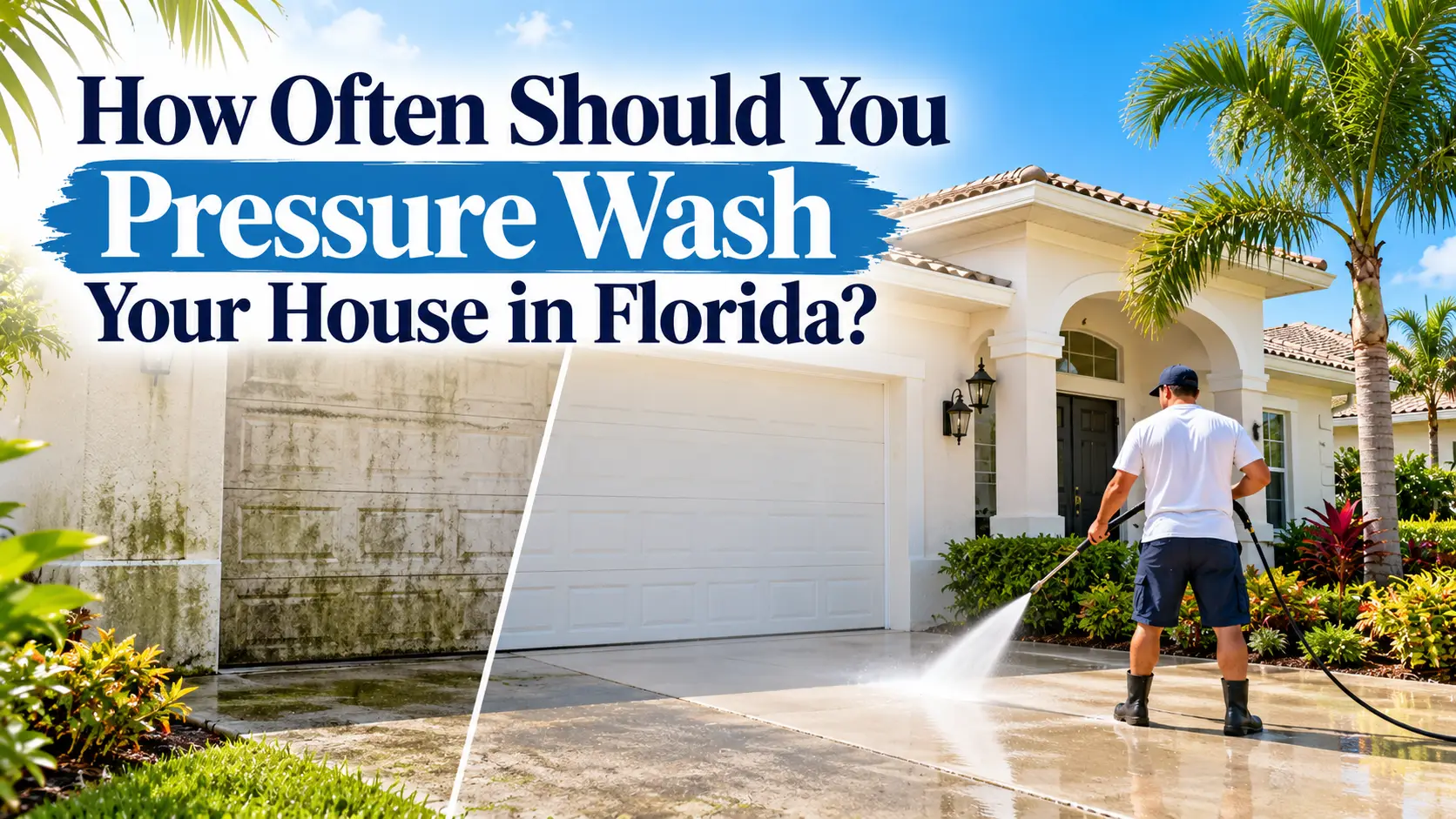
Florida’s sunshine, humidity, and frequent rain make outdoor living enjoyable, but they also create challenges for keeping your home’s exterior clean. Over time, algae, dirt, pollen, and other buildup can leave walls, driveways, patios, and pool decks looking neglected.
For homeowners in Sarasota and Southwest Florida, regular exterior cleaning is an important part of property maintenance. However, washing too frequently or using excessive pressure can damage painted surfaces, stucco, and other materials.
How often should you pressure wash your house? Most Florida homeowners can start with an annual exterior cleaning inspection and plan washing approximately every 6–12 months when conditions justify it. Shaded, humid, or coastal properties may need attention sooner, while well-maintained homes with little buildup may need cleaning less frequently. The safest method depends on the surface.
Why Your Neighbor’s Cleaning Schedule Might Not Work for Your Home
Two homes on the same street can have very different exterior cleaning needs.
A house surrounded by trees may develop algae faster than a property receiving direct sunlight. Homes near the Gulf Coast may experience additional salt deposits, while properties along busy roads can collect more dust and grime.
Several factors influence cleaning frequency.
Humidity and rainfall: Florida’s warm, humid conditions can encourage algae and mildew growth on damp exterior surfaces, especially where sunlight is limited.
Shade and landscaping: Trees, shrubs, and nearby structures can reduce airflow and keep certain walls damp longer.
Coastal exposure: Homes near the coast may accumulate airborne salt deposits that require appropriate cleaning.
Exterior materials: Stucco, painted siding, brick, concrete, and decorative coatings respond differently to cleaning methods.
Previous maintenance: A properly maintained exterior may require less intensive cleaning than a surface with years of accumulated buildup.
Instead of following a fixed schedule, inspect your home’s exterior periodically and clean when the condition of the surface requires it.
What Happens When You Wait Too Long Between Exterior Cleanings?
Exterior buildup usually develops gradually.
You may first notice darker areas on shaded walls, green discoloration near landscaping, or stains around outdoor living spaces.
As dirt and biological growth accumulate, the exterior can become more difficult to clean. Algae on walking surfaces may also create slippery conditions when wet.
However, not every stain indicates paint failure or structural damage.
Some discoloration can be removed through appropriate cleaning, while peeling paint, cracks, or persistent moisture problems may require repairs rather than washing alone.
Regular inspections help homeowners identify the difference before the problem becomes more extensive.
A Practical Exterior Cleaning Schedule for Florida Homes
There is no universal cleaning interval for every surface. The following ranges are practical planning estimates, not manufacturer requirements or guarantees.
Exterior surface | Suggested inspection or cleaning interval | Important consideration |
|---|---|---|
Painted stucco walls | Inspect every 6 months; clean as needed, often around 12 months | Use low-pressure methods suitable for the coating |
Vinyl or painted siding | Inspect every 6 months; clean approximately every 6–12 months if buildup develops | Avoid forcing water behind siding |
Concrete driveways | Inspect every 3–6 months; clean as needed | Shaded areas may develop slippery growth |
Pool decks | Inspect every 1–3 months; clean when dirt or biological buildup appears | Match cleaning methods to the deck coating |
Patios and walkways | Inspect every 3–6 months; clean as needed | Consider slip resistance and surface condition |
Coastal exterior surfaces | Inspect more frequently where salt deposits accumulate | Follow material-specific cleaning guidance |
For most homeowners, one thorough exterior assessment each year is a reasonable starting point. Cleaning frequency should then be adjusted based on visible buildup, exposure, and manufacturer recommendations.
Pressure Washing vs. Soft Washing: What Does Your Home Actually Need?
Pressure washing and soft washing are not interchangeable.
Pressure washing uses pressurized water to remove dirt and buildup. It can be appropriate for certain durable surfaces when the equipment, pressure, nozzle, and technique are correctly selected.
Soft washing generally relies on lower water pressure and suitable cleaning solutions to loosen and remove contaminants.
When Pressure Washing May Be Appropriate
Concrete driveways and some durable outdoor surfaces may tolerate controlled pressure washing.
However, even concrete can be damaged by excessive pressure, especially if it is weakened, deteriorated, or coated.
When Soft Washing May Be Better
Painted stucco, siding, and other delicate exterior finishes often require gentler methods.
High-pressure water can strip paint, damage stucco finishes, or force moisture into openings around windows and exterior joints.
The appropriate method should be based on the material, its condition, and the manufacturer’s care instructions—not simply the amount of dirt present.
What Is the Best Time of Year to Pressure Wash a House in Florida?
Florida homeowners can schedule exterior cleaning throughout the year, provided weather and surface conditions are suitable.
However, timing can affect how practical and effective the work will be.
Before the Rainy Season
Cleaning before periods of frequent rainfall can help remove accumulated dirt and existing biological growth.
It also provides an opportunity to inspect painted surfaces, exterior joints, and areas where moisture tends to collect.
After Heavy Storms
Storms can leave dirt, debris, and stains on exterior surfaces.
Once the property is safe, inspect the exterior for damage before washing. Cleaning should not be used to conceal storm-related deterioration or active water intrusion.
During Mild, Dry Weather
A mild day without heavy rain or extreme heat can provide more manageable working conditions.
Cleaning solutions should be applied according to their instructions, with attention to surface temperature, dwell time, and thorough rinsing.
For Southwest Florida homes, surface condition and suitable weather matter more than choosing one particular month.
Why High Pressure Isn’t Always Better
A powerful pressure washer may remove visible grime quickly, but greater pressure does not necessarily produce a better result.
Incorrect pressure or nozzle selection can cause several problems.
On painted walls, it may remove sound paint or expose weak areas of an existing coating.
On stucco, excessive pressure can damage the textured finish or force water into cracks.
On siding, spraying upward or toward seams can introduce moisture behind panels.
On pool decks, aggressive cleaning may wear away decorative coatings or damage textured finishes.
The objective should be to remove contaminants while preserving the surface underneath.
For this reason, professional exterior cleaning should involve selecting the appropriate method for each material rather than applying maximum pressure everywhere.
Should You Pressure Wash Your House Before Exterior Painting?
Cleaning is an important part of preparing many exterior surfaces for painting.
Dust, chalking, algae, and other contaminants can interfere with paint adhesion when they remain on the surface.
However, pressure washing alone does not complete the preparation process.
Depending on the existing condition, exterior painting preparation may also involve removing loose paint, repairing damaged surfaces, addressing cracks, and allowing the substrate to dry thoroughly.
Painting over damp or contaminated surfaces can contribute to premature coating problems.
If you’re planning to repaint your Florida home, schedule cleaning and preparation early enough to allow appropriate drying before primer or paint is applied.
The required drying period depends on weather, substrate, moisture conditions, and the coating manufacturer’s instructions.
How Much Does Professional House Washing Cost in Florida?
The cost of exterior house washing depends on the property and the cleaning requirements.
A small, single-story home with accessible walls may require less work than a larger property with multiple levels, extensive staining, or difficult-to-reach areas.
Pricing factors commonly include:
Home size and exterior surface area
Building height and accessibility
Stucco, siding, concrete, or other surface materials
Type and severity of buildup
Cleaning method and products required
Additional areas such as driveways, patios, and pool decks
A quote should identify which surfaces will be cleaned and whether any areas require special treatment.
For Sarasota homeowners, comparing estimates based on the actual scope of work is more useful than relying on a generic price per square foot.
What Sarasota-Area Homeowners Should Know Before Booking Exterior Cleaning
Homes in Sarasota, Venice, North Port, Bradenton, and Port Charlotte can experience different cleaning needs depending on their exposure to moisture, shade, coastal conditions, and landscaping.
Before arranging exterior cleaning, identify the surfaces you want addressed and any areas with peeling paint, cracks, loose materials, or recurring moisture problems.
Ask which cleaning method is appropriate for your exterior finish and how nearby landscaping, windows, fixtures, and other sensitive areas will be protected.
Burst of Colors Painting is a family-owned and locally operated company with over 40 years of painting experience. Homeowners planning exterior maintenance can explore our power washing services to learn more about the cleaning work we provide in Southwest Florida.
Frequently Asked Questions
Should Florida homeowners pressure wash their houses every year?
Annual cleaning is a reasonable starting point for many Florida homes, but it isn’t mandatory. Inspect exterior surfaces periodically and adjust the schedule based on algae, dirt, coastal exposure, and the condition of the material.
Does Florida humidity cause algae and mildew on exterior walls?
High humidity and prolonged dampness can encourage biological growth, especially on shaded surfaces. Improving drainage, addressing moisture problems, and using appropriate cleaning methods can help manage recurring buildup.
Is pressure washing safe for stucco homes in Florida?
High-pressure washing can damage stucco, particularly when the surface is cracked, deteriorated, or painted. Low-pressure cleaning methods are generally preferable, subject to the coating and stucco manufacturer’s recommendations.
How often should you pressure wash a driveway in Florida?
Inspect concrete driveways every few months and clean when dirt, algae, or slippery buildup develops. Some driveways may need cleaning every 6–12 months, while others require less frequent attention.
How often should Florida homeowners clean their pool decks?
Pool decks should be inspected regularly for dirt, algae, and slippery areas. Cleaning frequency depends on shade, drainage, usage, and the deck coating. Use a method compatible with the surface rather than assuming high-pressure washing is safe.
Can pressure washing damage exterior house paint?
Yes. Excessive pressure, incorrect nozzle selection, or poor technique can remove paint and damage underlying surfaces. A gentler cleaning method may be more appropriate for painted walls.
Final Thoughts:
Build a Cleaning Schedule Around Your Home, Not the Calendar
So, how often should you pressure wash your house in Florida?
For many homeowners, inspecting the exterior twice a year and considering cleaning approximately every 6–12 months is a practical starting point. However, some properties need more frequent attention, while others can go longer between cleanings.
The best approach is to consider your home’s exposure, surface materials, visible buildup, and existing paint condition.
Regular, appropriate cleaning can help maintain your property’s appearance without exposing delicate surfaces to unnecessary pressure.